Let’s Stop Pretending This Is Harmless
Here’s what most people tell themselves:
“It’s just sitting there.”
No it’s not.
It’s deteriorating. It’s costing you money. And it’s quietly getting harder to deal with every single month.
The reality is, vacant property costs in Detroit don’t stay flat—they stack. Fast.
A vacant house isn’t paused. It’s moving, just in the wrong direction.
And the longer you wait, the more expensive that movement becomes.
TL;DR — Read This First
A vacant house in Detroit doesn’t sit still—it bleeds money.
In 12 months, a typical vacant property can cost you $40,000+ in:
- Property taxes, insurance, and utilities
- City fines and code violations
- Damage from neglect, weather, or break-ins
- Insurance claims that get denied because the home is vacant
And the longer you wait, the worse it gets—and the less your house is worth.
Vacant Property Costs in Detroit — What You’re Really Paying Each Month
Let’s talk about the real holding costs of a vacant house.
Not guesses. Not theory.
This is what it actually looks like when a property sits.
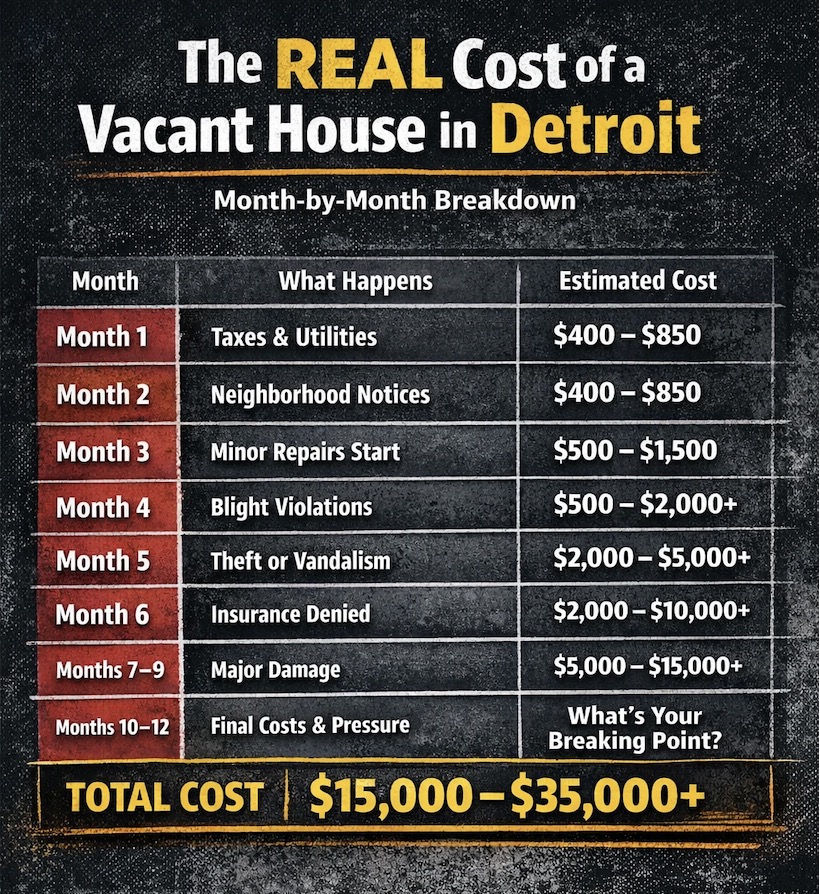
Month 1–3: “It’s Fine”
At first, nothing feels urgent.
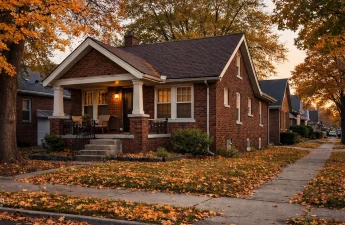
The house is empty, but it still looks like a house. Maybe the lawn gets a little shaggy. Maybe the mail piles up.
You’re still in control. Or at least it feels that way.
This is where most people lose time.
Because nothing has broken yet… but the clock is already running—and so are the holding costs.
Month 4–6: The City Notices
Now it starts getting attention.
Neighbors notice. The city notices. Code enforcement starts driving by.
This is where Detroit vacant property fines begin to show up.
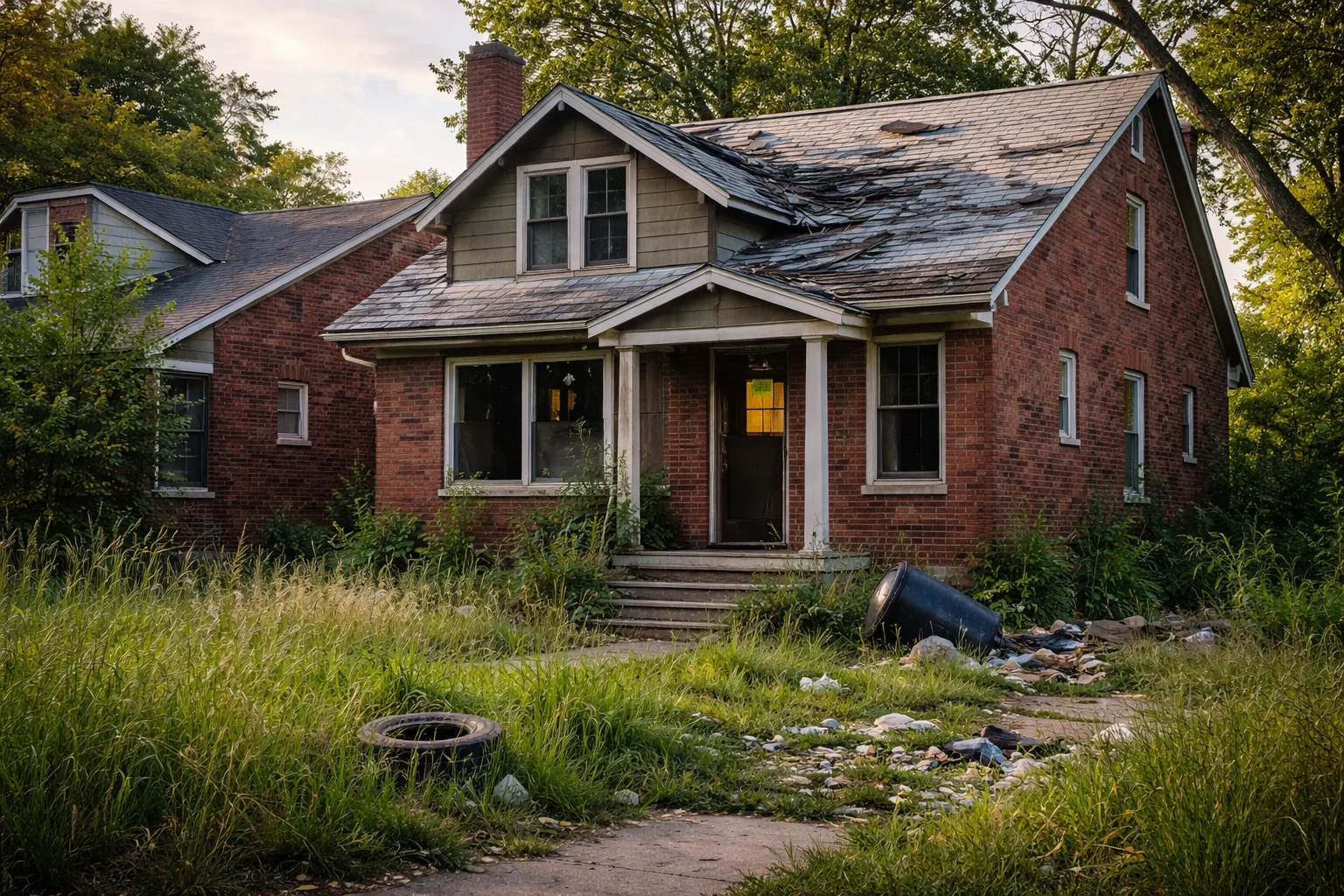
Grass violations. Trash. Peeling paint. Open entry points.
You get a notice on the door. Maybe a fine. Maybe multiple.
Still manageable. Still fixable.
But now you’re reacting instead of deciding.
Month 7–9: The House Starts Slipping
This is where things turn.
Moisture gets in. Small issues become bigger ones.
Someone tests a door or window—and finds one that opens.
Now you’ve got risk.
And here’s the part most people don’t realize:
If you don’t have vacant home insurance, your coverage is basically worthless.
Something happens? Pipe bursts? Break-in?
Claim denied.
No appeal. No gray area. Just denied.
A Real Example (And This Happens All The Time)
I walked a house on the west side of Detroit with a seller who had already moved out.
Not a bad house. Solid structure. Needed updates, sure but nothing crazy.
I gave him a fair offer based on what the property was worth at that time.
He hesitated. Wanted to think about it.
Thought maybe he’d list it.
Maybe a family member would take it over.
All normal. Understandable.
Fast Forward 10 Months
He calls me back. Same house. Completely different situation.
Now the grass is out of control. Notice on the door. Back door kicked in. Pipes burst over the winter.
Insurance claim?
DENIED.
No vacant property insurance.
The Second Walkthrough
Different energy.
Less confidence. More urgency.
He didn’t need options anymore.
He needed out.
The New Offer
It came in about $50,000 lower than before.
Same house.
Just ten months of damage and accumulating vacant property costs layered on top.
He didn’t argue.
Because by then, he understood exactly what waiting had cost him.
Month 10–12: Now It’s a Problem
At this point, this isn’t a property anymore.
It’s a situation.
More damage. More fines. More stress.
The house isn’t sitting—it’s dragging everything down with it.
And the options you had earlier?
They’re gone.
The Part Nobody Wants to Say
This isn’t about pressure. It’s about math.
A vacant house doesn’t stay the same.
It gets worse. It gets more expensive. And it gets harder to solve.
Every month you wait, you lose a little more control.
Until eventually, the decision gets made for you.
If You’re Sitting on a Vacant House…
At least understand what it’s costing you.
Not just in dollars, but in options.
Because the best time to deal with it is early.
Before the damage. Before the fines.
Before the $50,000 lesson.
If you want to understand your options for selling a vacant house in Michigan, this breaks it down clearly:
==> How to Sell a Vacant House in Michigan
TL;DR — The Reality
A vacant house doesn’t wait.
It gets worse.
It gets more expensive.
And it gets harder to fix.
Wait long enough, and you don’t make the decision anymore—the situation makes it for you.
Dennis Fassett has been purchasing and evaluating residential properties across Detroit and Southeast Michigan since 2004, including many vacant houses where the real cost wasn’t obvious at first—but showed up month by month.