Probate Houses in Michigan: What the Court’s Website Won’t Tell You
The court website will tell you what forms to file.
It will show you the steps. The sequence. The structure.
If you follow it carefully, you can get through the process.
What it won’t tell you is what this actually feels like.
Because the hardest part of probate in Wayne County isn’t the paperwork.
It’s everything happening around it at the same time.
The Role Nobody Really Explains
On paper, the role is simple.
You’re the personal representative. You’re responsible for handling the estate, which means identifying assets, paying bills, and ultimately distributing what’s left.
That sounds manageable, until you realize who you’re actually accountable to.
The court.
The estate.
And the heirs.
And the pressure doesn’t come from the court. It comes from people.
People who want updates.
People who want timelines.
People who want their share.
Sometimes it’s polite. Sometimes it’s not.
Sometimes it’s one person asking questions. Sometimes it’s multiple people pulling in different directions.
And whether they say it directly or not, there’s an expectation sitting underneath everything:
You’re in charge. Don’t mess this up.
That’s not low-level pressure. That’s real pressure.
The Court Isn’t There to Walk You Through It
The court system does what it’s designed to do.
It processes filings. It reviews documents. It enforces structure.
What it doesn’t do is guide you step-by-step through decisions.
There’s no one checking in to make sure you understand what comes next. No one simplifying things when they start to stack up.
So most people do what makes sense. They bring in an attorney. And that helps but it also adds another layer.
More cost.
More coordination.
More decisions to make.
You’re still the one responsible for everything. You’ve just added someone else to the process who needs direction, information, and input from you.
For some people, that reduces stress. For others, it just changes the type of stress.
You’re Expected to Act Like You’ve Done This Before
Most people will only do this once in their lifetime. And as such, there’s a moment that hits early on.
You’re filling out forms. Gathering information. Trying to understand what’s required.
And it dawns on you: you’re expected to handle this like you’ve done it before.
Inventorying the estate.
Tracking assets.
Accounting for money coming in and going out.
Reporting to the court.
Everything needs to be documented. Everything needs to be accurate. Everything needs to be defensible.
Because this isn’t just administrative, it’s fiduciary.
Which means if something is done incorrectly – or even just questioned – you’re the one answering for it.
And you’re doing all of this while dealing with everything else that comes with losing someone.
Family Dynamics Don’t Stay Quiet
This is where things get real, because Probate doesn’t create conflict. It exposes it.
Most families don’t have perfectly aligned expectations when it comes to money, timing, or decisions.
And once probate starts, those differences don’t stay in the background.
They show up.
One person wants to sell the house quickly.
Another wants to hold onto it.
Someone doesn’t respond.
Someone else questions every decision.
And then there’s the dynamic that shows up more often than people expect:
You’re the one doing the work.
Everyone else has opinions.
That’s where things start to wear on people. Not because the process is confusing, but because the situation is.
The House Doesn’t Sit Quietly
At some point, the house often becomes the center of everything.
And if it’s vacant, it doesn’t just sit there waiting for decisions to be made.
It starts requiring attention.
And across the state that responsibility changes with the seasons.
In the winter, you’re dealing with heat, frozen pipes, and the risk of damage if something goes wrong. On top of that, many municipalities have snow removal ordinances. If sidewalks aren’t cleared, you can get fined.
In the spring, water issues show up. Drainage problems. Roof leaks that weren’t obvious before.
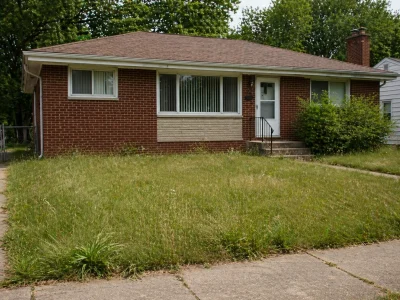
In the summer, the property becomes more visible. Grass needs to be cut. Exterior maintenance matters more, especially when code enforcement is active.
In the fall, it’s leaves, cleanup, and preparing the house for another winter.
The house doesn’t pause because the owner passed.
It becomes your responsibility immediately.
The Costs Don’t Wait Either
This is where things start to feel heavier.
Property taxes still need to be paid.
Utilities don’t stop.
Maintenance doesn’t go away.
And then there’s insurance – this is one of the bigger surprises for people.
Standard homeowner policies don’t cover extended vacancy. Not partially. Not “sometimes.”
If a house sits vacant beyond what the policy allows, and something happens, claims are typically denied.
No appeal. No exception. So now you’re looking at vacant property insurance. Which costs more. A lot more.
And in some cases, becomes necessary just to protect the asset.
All of this is happening at the same time. No income. Ongoing expenses. Increasing risk.
Time Doesn’t Work in Your Favor
An occupied house is stable; a vacant house is not. The longer it sits, the more things start to shift.
Small maintenance issues become larger ones. Minor concerns turn into real problems.
And depending on the area, an empty house can attract attention.
Not always in ways you want: Break-ins. Vandalism. General deterioration.
Nothing dramatic on day one, but over time, it adds up.
And the longer decisions are delayed, the more the situation compounds.
This Is Where Things Start to Stall
When you step back and look at it, it’s not hard to see why probate slows down.
It’s not just the legal process, it’s everything layered on top of it.
You’ve got:
Legal responsibilities
Family dynamics
Financial pressure
A physical property to manage
And your own life continuing in the background
So decisions get delayed.
Not because people don’t care, because everything is pulling at once.
And when that happens, the easiest thing to do is wait.
The Weight People Don’t Talk About
This is the part that doesn’t show up anywhere on the court website.
You’re dealing with grief – and at the same time, you’re managing responsibility.
All while you’re trying to keep things from getting worse – financially, physically, and sometimes within the family.
You’re expected to be organized, responsive, and rational, even when things don’t feel that way.
That’s the weight of it.
And most people go through it without ever really saying that out loud.
What Actually Helps
There isn’t a shortcut for probate but there are things that make it more manageable.
Clarity helps – understanding what you’re actually responsible for, and what you’re not.
Realistic expectations help – knowing that this won’t feel clean or easy.
Simplifying decisions helps – especially when multiple people are involved.
And understanding how different pieces fit together – legal, financial, and practical – helps you move forward without second-guessing every step.
If you’re trying to understand how the actual sale process fits into all of this, I broke that down separately here: How to Sell a Probate House in Michigan
Closing
The legal process in probate is manageable. The forms can be figured out. The steps can be followed.
That’s not what makes it difficult.
What makes it difficult is everything happening around it at the same time.
The pressure.
The responsibility.
The decisions.
The property.
The people.
Most of the challenge isn’t the court process.
It’s carrying all of that at once – and still moving forward.
Dennis Fassett has worked with probate properties throughout Michigan for over two decades, helping families navigate the practical realities that don’t show up in court instructions. His experience includes working alongside personal representatives dealing with vacant homes, family disagreements, insurance challenges, and the day-to-day pressures that come with settling an estate. His perspective is grounded in what actually happens during probate – not just the legal process, but everything surrounding it.