How Is Home Value Determined?
I’ve looked at thousands of houses over the years, and one of the fastest ways to get a conversation sideways is to start with the sentence, “My house is worth $X.”
Sometimes the number came from an online estimate. Sometimes a neighbor sold for that amount. Sometimes an agent mentioned what the house might bring after it was cleaned up and listed. Sometimes it is simply the number the owner needs in order for the next move to work.
None of those numbers is automatically ridiculous. The problem is that people use the word “value” as though it describes one objective number stamped somewhere inside the house. It does not.
A house can have several defensible values at the same time because the question changes depending on condition, buyer, timing, and selling method.
If you understand that, valuation gets a lot less mysterious.
Start With the Question You’re Actually Asking
When a homeowner asks me what a house is worth, my first mental question is: worth under what circumstances?
There is the likely retail value of a clean, financeable house exposed to the open market. There is the value of the same house today if the roof leaks, the kitchen is torn apart and the furnace is dead. There is an appraised value used by a lender. There is an assessed value used for taxes. There is an automated estimate generated by a computer that has never walked through the front door.
Those numbers may be close. They may also be nowhere near each other.
This is why arguments about value often become arguments between people answering different questions. A seller may be looking at what the renovated house down the street sold for. A buyer may be looking at what it costs to turn the seller’s current house into something comparable to that renovated house. Both can agree on the eventual retail value and still be far apart on today’s value.
Comparable Sales Are Evidence, Not Magic
Residential valuation usually starts with comparable sales. That sounds easy until you actually have to choose the comparables.
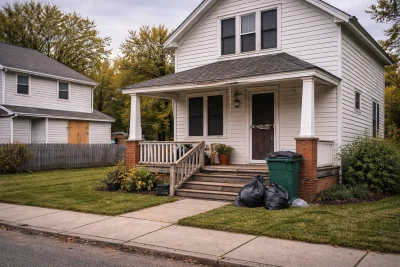
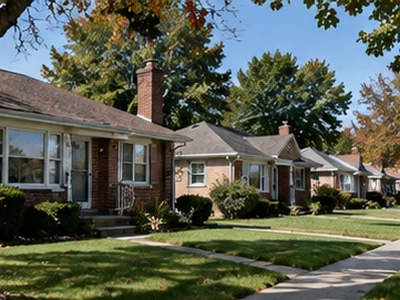
The closest sale is not automatically the best sale. Neither is the house with the same square footage. A good comparable is a house that the same buyer would realistically consider as an alternative. That distinction matters a lot in Southeast Michigan. Cross a major road, a municipal boundary or sometimes just a few blocks and the buyer pool can change. Two houses can be physically similar while competing in different markets.
I would rather use a slightly farther sale that matches the subject’s style, condition and buyer pool than force a nearby sale into the analysis because it happens to sit inside an arbitrary radius.
The same applies to asking prices. A listing tells you what a seller hopes to receive. A closed sale tells you that a buyer and seller actually completed a transaction at a known price. Active listings matter because they are competition, but they are not proof of value.
Condition Changes More Than the Repair Bill
Condition is where homeowners and buyers most often start talking past each other.
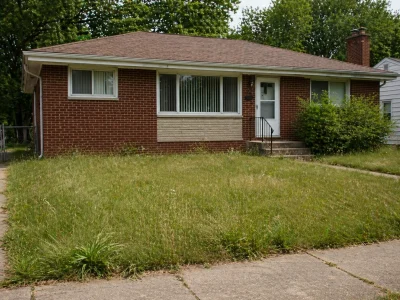
Suppose a renovated brick ranch sells for $260,000. A similar ranch two streets over needs a roof, kitchen, bath, flooring, paint and electrical work. The second house does not become a $260,000 house merely because someone can imagine it renovated.
The obvious difference is repair cost. The less obvious differences are time, financing, permits, carrying costs, uncertainty and risk. A buyer taking on a major project is not simply writing checks to contractors. That buyer is accepting everything that can happen between acquisition and eventual resale.
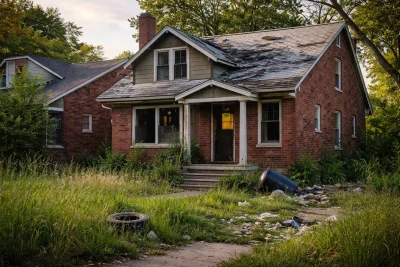
Condition can also shrink the buyer pool. A dated but functional house may still qualify for ordinary financing. A house with major safety or structural problems may not. Fewer qualified buyers usually changes the economics.
That is why I distinguish between after-repair value and current as-is value. They answer different questions.
Price Per Square Foot Is a Shortcut, Not a Valuation Method
Price per square foot is useful because it is easy. It is also easy to abuse.
If a 1,000-square-foot house sells for $200 per square foot, that does not mean the 2,000-square-foot house next door is automatically worth $400,000. Houses do NOT scale that cleanly.
Bathrooms, garages, basements, layout, condition and lot utility all matter. A 1,500-square-foot house with three sensible bedrooms and two baths may compete very differently from another 1,500-square-foot house with one bath and a bedroom you have to walk through to reach another bedroom.
Buyers purchase usable houses, not spreadsheets.
I use price per square foot as a reasonableness check when the properties are genuinely similar. I don’t let it replace the harder work of figuring out whether the properties really compete.
Online Estimates Are Useful Until They Pretend to Know Too Much
I have no problem with automated home-value estimates. They can be a useful starting point, especially in subdivisions where houses are highly similar and there are plenty of recent sales.
But the computer has a visibility problem.
It may know the square footage and bedroom count. It may not know that the basement took on water twice last year, the roof is at the end of its life, the kitchen was remodeled six months ago or an addition was built badly thirty years ago.
The algorithm is doing exactly what it was designed to do: estimate from available data. Trouble starts when a homeowner treats that estimate as though somebody physically inspected the property and underwrote the condition.
If three websites give you three different values, that is not necessarily evidence that two of them are incompetent. It is evidence that valuation contains assumptions.
The Market Gets a Vote
Even a careful valuation is a snapshot.
Interest rates change what buyers can afford each month. Inventory changes how many alternatives they have. A house that attracts multiple buyers in a tight market can behave differently from the same house when buyers have twenty similar options.
This is why an old comparable can become stale even if the house itself has not changed. The transaction occurred in a different market.
Days on market also tells a story. If renovated houses are selling in a week and dated houses are sitting for ninety days, the market is telling you something about what buyers currently reward.
The market is not obligated to honor what somebody paid for improvements, what an owner owes on the mortgage or what an online estimate said last spring.
Repairs Do Not Convert Dollar for Dollar Into Value
This deserves special attention because it causes expensive mistakes.
A $15,000 roof doesn’t necessarily add $15,000 to the value of the house. Sometimes it just removes a $15,000 problem.
There is a difference between restoring something buyers expect to function and adding something buyers will pay extra to obtain. Replacing a failed furnace is important. It doesn’t turn an ordinary house into a premium house. It gives the house heat.
The same problem appears with over-improvement. Every neighborhood has some practical ceiling. You can install finishes that belong in a million-dollar house, but if buyers in that location will not support the resulting price, your receipts do not create a new market.
Why Two Knowledgeable People Can Disagree
People sometimes assume that if two experienced buyers or agents produce different numbers, one must be playing games.
Sometimes somebody is wrong. Sometimes somebody is playing games. But legitimate differences are common.
One person may use a different comparable set. One may estimate repairs at $45,000 and another at $65,000. One may expect the project to take four months and another six. One may believe the market is softening. Another may have cheaper capital or a different exit strategy.
Small differences in several assumptions can create a large difference in the final number.
That is why I care more about whether a valuation can be explained than whether somebody claims precision down to the last thousand dollars.
A Range Is Usually More Honest Than a Magic Number
After doing this for a long time, I’m suspicious of false precision.
A defensible range is often more useful than pretending a property is worth exactly $247,350. Real estate doesn’t trade like a publicly quoted stock. You need a buyer, at a particular moment, under particular terms.
The goal isn’t to discover the one sacred number hidden inside the property. The goal is to understand the evidence well enough to make a decision.
If you’re deciding whether to repair, list, rent, keep or sell directly, that understanding matters far more than winning an argument over an estimate.
For the nuts-and-bolts explanation of comps, condition, market timing and the different types of value, see my guide on How Is Home Value Determined?.
The question I would keep coming back to is simple: worth to whom, in what condition, and under what circumstances?
Answer that first. The number makes a lot more sense afterward.
Dennis Fassett has been purchasing and evaluating residential properties across Detroit and Southeast Michigan since 2004. Over more than two decades he has worked with homeowners, inherited properties, rentals, vacant houses, direct purchases and properties needing significant repairs. His writing focuses on the practical realities behind home value, ownership and selling decisions.